
Drug Substance Development and API Manufacturing
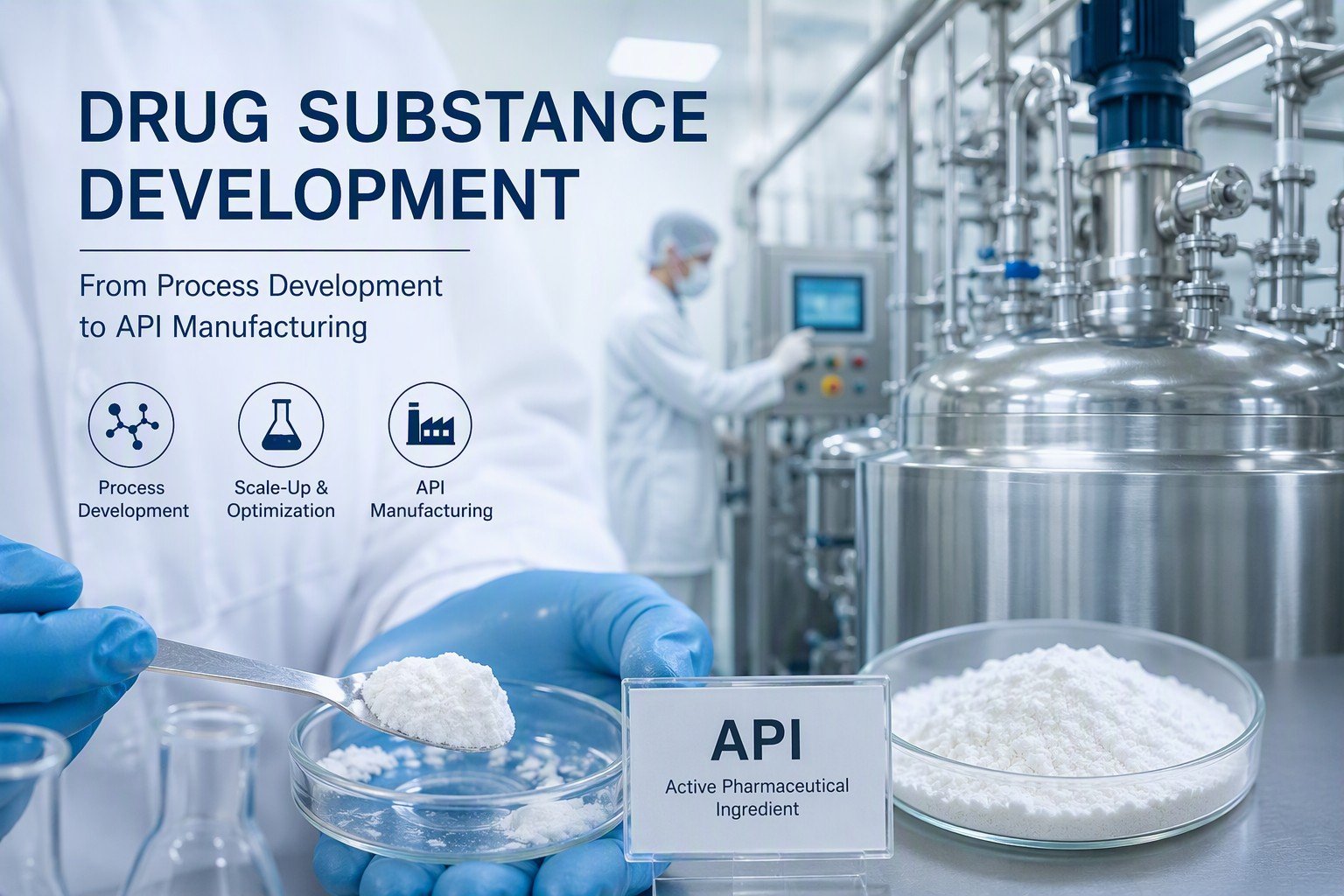
Drug substance development is not simply a matter of producing a larger batch. Every step toward commercialization can introduce new technical, regulatory, capacity, cost, and scheduling decisions. A route that works at laboratory scale may require significant optimization before it can be reproduced safely and economically at pilot or commercial scale.
Complex or evolving synthetic routes
Reaction safety and containment requirements
Impurity identification and control
Raw-material availability and supplier qualification
Analytical method development and transfer
GMP manufacturing capacity and scheduling
Documentation required to support regulatory filings
Demand uncertainty between clinical and commercial stages
For emerging biopharma companies, these demands can exceed the resources of a small internal CMC organization. Programs may become fragmented across multiple providers, creating gaps in communication, duplicated work, and repeated technology transfers.
What Is a Virtual CDMO?
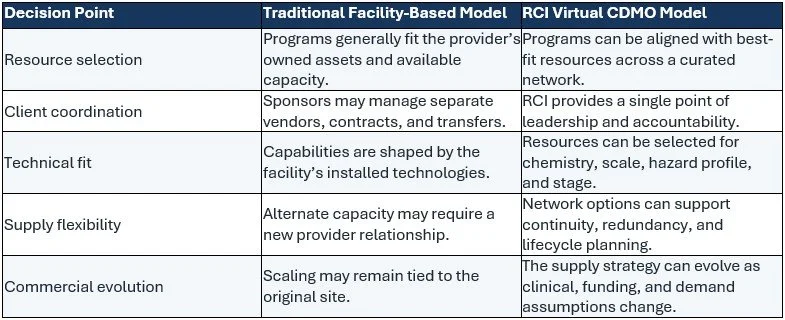
A Virtual Contract Development and Manufacturing Organization integrates external development and manufacturing capabilities under a unified program management model. The Virtual CDMO is responsible for selecting and coordinating appropriate resources, maintaining continuity of technical knowledge, managing deliverables, and helping the sponsor adapt the supply strategy as the program advances.
RCI’s model is designed to provide the breadth of a manufacturing network without requiring the client to manage that network independently. RCI serves as the commercial, technical, and operational interface across the program.
Traditional CDMO vs. RCI Virtual CDMO
How the RCI Model Supports the Drug Substance Lifecycle
1. Program Strategy and Resource Alignment
RCI helps define the work package, development stage, technical requirements, scale expectations, timeline, and commercial objectives. Suitable resources can then be aligned to the project rather than forcing the project into a predetermined footprint.
2. Process Development and Route Optimization
Programs may include route scouting, process development, reaction optimization, impurity control, analytical support, and early scale-up. Work can be structured using FTE, fixed fee, or blended commercial models based on program needs.
3. Clinical Supply and GMP Manufacturing
As a program enters clinical development, RCI coordinates the transition from development chemistry to appropriately controlled GMP manufacturing, with attention to material requirements, documentation, specifications, testing, release, and delivery.
4. Technology Transfer and Scale-Up
RCI manages knowledge transfer across development and manufacturing resources, helping maintain continuity of process understanding, analytical methods, raw-material requirements, controls, and critical decisions.
5. Commercial API Supply and Lifecycle Management
Commercialization may require capacity expansion, cost improvement, sourcing diversification, alternate-site planning, or demand-driven changes. The Virtual CDMO model allows the supply strategy to evolve without losing central program oversight.
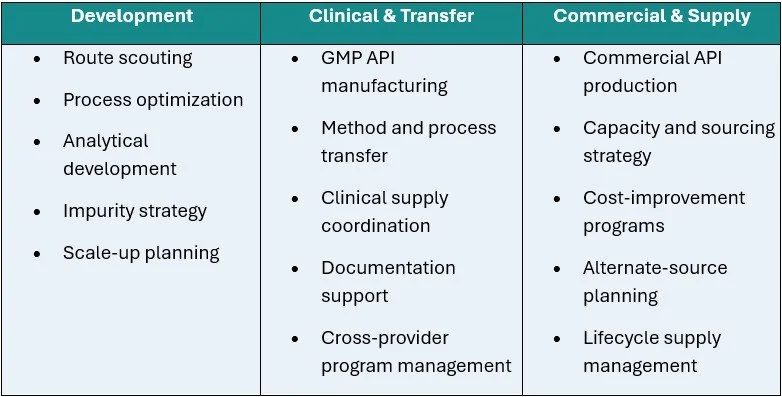
Core Capabilities
Business Benefits for Emerging and Mid-Sized Drug Developers
One accountable partner
RCI provides a central interface for program coordination, decisions, deliverables, and issue resolution.
Flexible access to specialized capability
Projects can be matched to resources suited to the chemistry, scale, hazard profile, quality requirements, and development stage.
Reduced coordination burden
Sponsors can avoid independently managing a fragmented collection of development and manufacturing providers.
Continuity across development stages
Central oversight helps preserve program knowledge as work moves from the laboratory to clinical and commercial scale.
Adaptable commercial structure
FTE, fixed fee, and blended project structures can be used according to the work scope and level of technical uncertainty.
Supply-chain optionality
A network model can support geographic, technical, capacity, and lifecycle alternatives when a program requires them.
When to Consider a Virtual CDMO
The model can be especially valuable when a sponsor:
Has a lean internal CMC or technical-operations team
Needs specialized chemistry or manufacturing capability
Expects the program’s scale and supply requirements to change
Wants to reduce the number of vendor relationships it manages directly
Needs help transitioning from early development to GMP supply
Wants optionality beyond a single facility footprint
Is planning for commercial supply, alternate sourcing, or lifecycle cost improvement
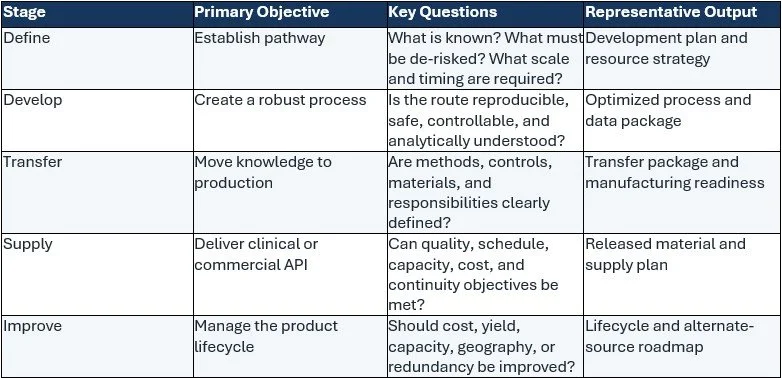
A Practical Stage-Gate Framework
START A CONFIDENTIAL PROJECT DISCUSSION Contact Richman Chemical at (215) 628-2946 or click the button below to discuss chemistry, specifications, scale, quality requirements, and timing.